
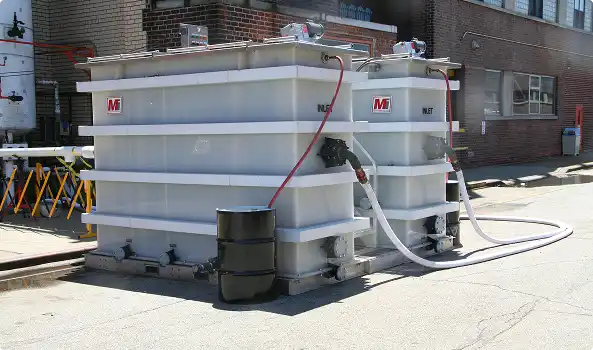
An oil-water separator is a wastewater treatment device designed to remove oils, greases, hydrocarbons, and settleable solids from contaminated water. While all separators rely on gravity, not all gravity systems work the same—and performance varies dramatically depending on design.
Traditional systems like API and CPI separators rely on simple tank geometry or corrugated plates. These designs often struggle with turbulence, solids fouling, and real-world loading conditions. Plastic media blocks trap fines, clog quickly, and are nearly impossible to clean.
Modern enhanced-gravity separators—like Mercer’s Compliance Master™—use flat-plate coalescers, engineered baffling, laminar-flow architecture, and hopper-bottom solids management to deliver predictable separation. Oil droplets rise as they coalesce on plate surfaces, solids settle, and laminar flow ensures no short-circuiting or bypass.
Whether used in industrial stormwater, electrical utilities, refineries, O&G operations, manufacturing, rail, aviation, or transportation, a properly designed separator protects permits, prevents sheen, and reduces maintenance.