Above-Ground Oil-Water Separators
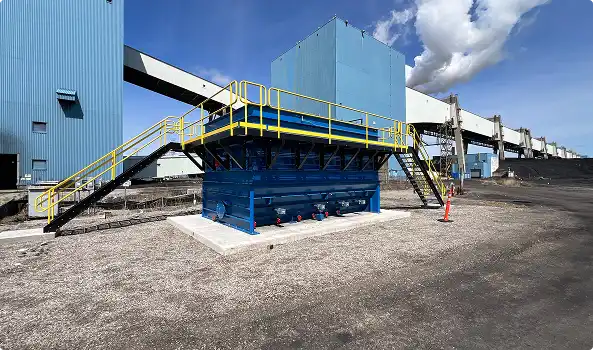
OPERATING TIER
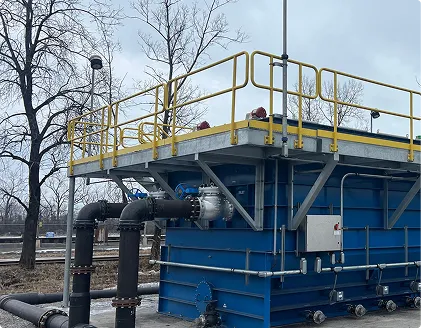
Mercer separators at this capacity are widely used in produced water treatment trains handling frac flowback and early-life production, where high flow rates, elevated oil loading, and variable water quality challenge traditional equipment. These systems are frequently deployed as a direct replacement for above-ground storage tanks (ASTs) and gun barrel separators, offering a compact, engineered solution with predictable hydraulic and separation performance. The 2,000 GPM design utilizes an internal split-flow configuration that divides influent into two independent 1,000 GPM treatment trains within a single vapor tight vessel, maximizing effective tank volume while controlling internal velocities.
The dual-train split-flow design provides critical operational flexibility and API 421 compliance. By dividing flow between two parallel paths, velocity through each coalescer remains below the API-recommended 3 ft/min limit, promoting effective droplet coalescence and minimizing oil re-entrainment during peak flowback conditions. Each train can be isolated independently, allowing operators to clean or service one side while the other remains in operation—maintaining continuous processing without the downtime, footprint, or inefficiencies associated with AST-based settling or gun barrel systems.
At this level, engineering review is not optional. It is fundamental to performance.

Built To Scale
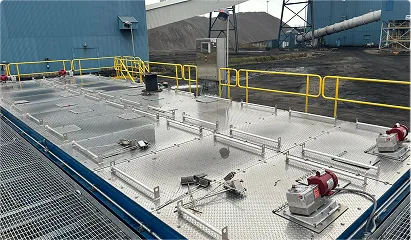
Please Note: Exact materials, dimensions, and configurations vary by application. Carbon steel construction is typically introduced at higher flow ranges where structural requirements dictate.
FIELD-PROVEN SYSTEMS
At this scale, separators are part of core plant infrastructure.
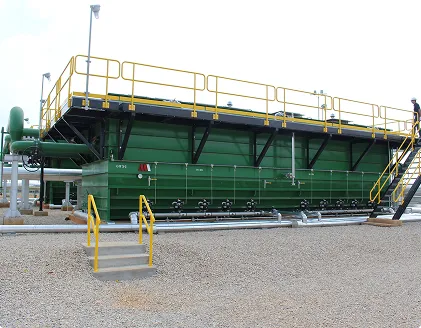
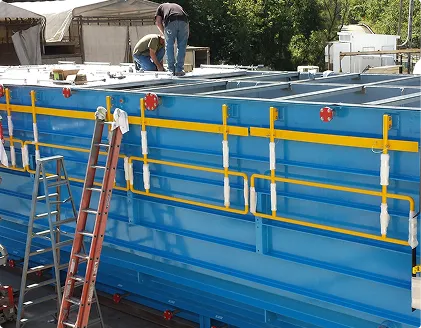
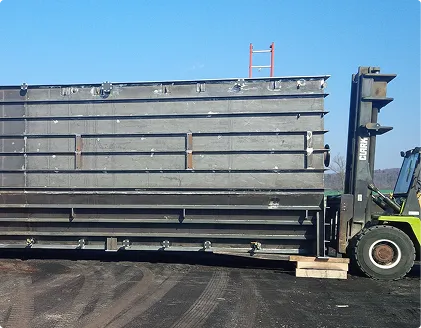
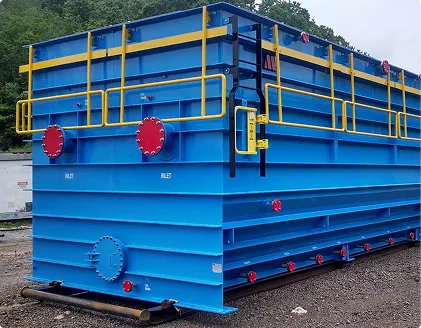
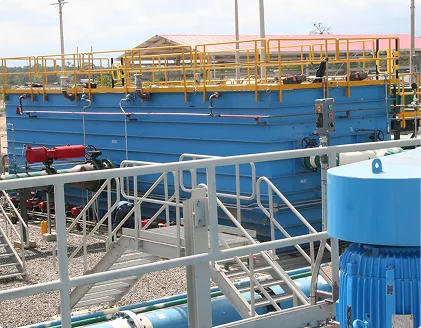
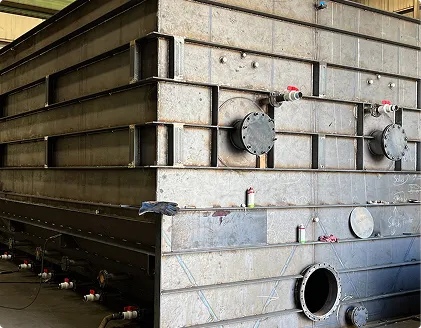
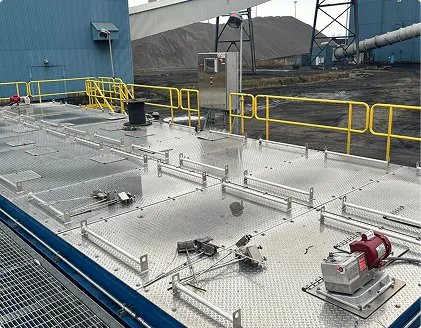
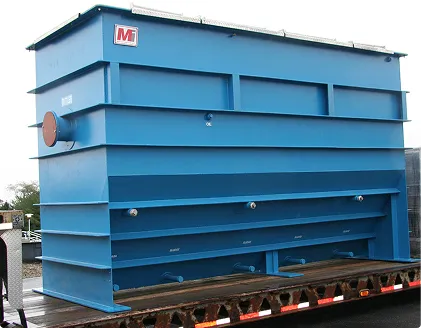
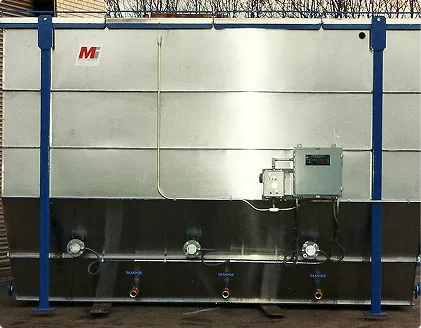
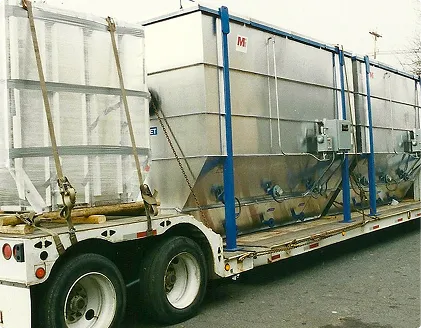
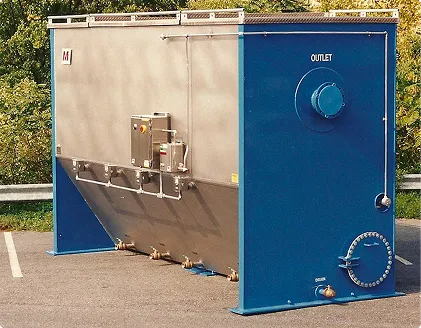
The installations shown represent Mercer systems operating at or near the 2,000 GPM class in environments where downtime, fouling, or performance uncertainty is unacceptable.
Above Ground
400 GPM
Above Ground
400 GPM
Above Ground
400 GPM
Above Ground
400 GPM
Above Ground
400 GPM
Above Ground
400 GPM
Above Ground
400 GPM
Above Ground
400 GPM
Above Ground
400 GPM
TRUSTED BY INDUSTRY LEADERS
A small sampling of companies with Mercer separators operating at or near the 2,000 GPM class.





ENGINEERED TO SOLVE
Flow rate is a label. Operating scale is the reality.
CORE TECHNOLOGY
A tank provides residence time.
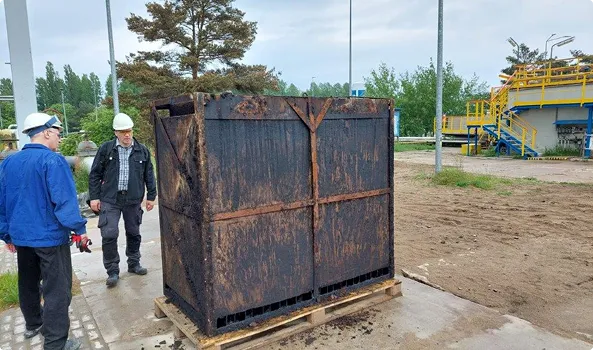
Separation performance is determined by what happens inside the coalescer.
Mercer’s Multi-Pack™ coalescer is a purpose-engineered separation system designed to remain effective, adjustable, and serviceable under sustained high-flow operation typical of large parallel systems.
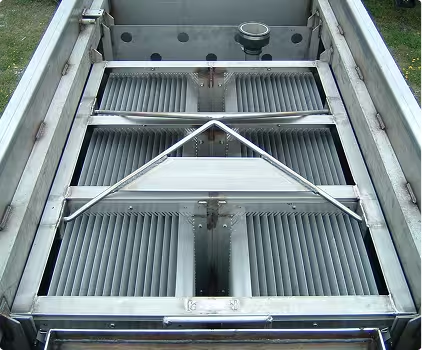
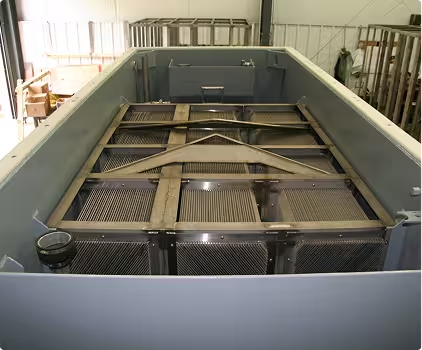
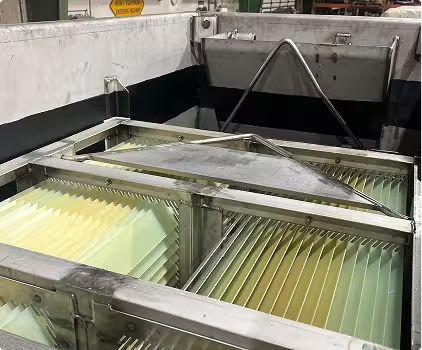
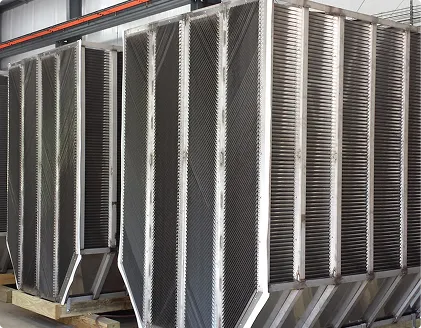
Flat, steep-angled plates promote predictable oil droplet rise while allowing solids to shed cleanly. This prevents the solids buildup and fouling common in corrugated or pocketed media at higher velocities.
Learn MorePlate spacing can be adjusted to match actual wastewater conditions, including oil type, temperature, viscosity, and solids behavior. Performance is tuned rather than assumed.
Learn MorePlates are arranged in a herringbone configuration that separates oil rise paths from solids settling paths, stabilizing internal hydraulics across parallel treatment trains.
Learn MoreAs oil coalesces and solids shed from the plates, they enter dedicated Chimney Zones™ designed to isolate separation from turbulence and prevent re-entrainment.
Learn MoreAll at no cost to you.
We walk your site, capture real influent data if needed, engineer a custom separator from your worst-case scenario, and validate performance before fabrication. Only after the data confirms it do we issue a written guarantee. That’s how risk is removed.
PROVEN LONGEVITY
Built to Stay in Service
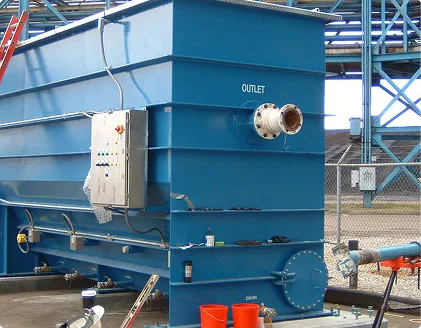
Many Mercer systems operating near this capacity class were installed years ago and remain in continuous operation today. These are not retired assets—they are active separators still managing oil and solids under real operating conditions.
Longevity at this scale reflects internal designs that can be inspected, cleaned, and maintained over time rather than replaced.
Above Ground
400 GPM
year: 2003

Above Ground
400 GPM
year: 2003
Above Ground
400 GPM
year: 2003
Above Ground
400 GPM
year: 2003
Above Ground
400 GPM
year: 2003
Above Ground
400 GPM
year: 2003
INDUSTRY APPLICATIONS
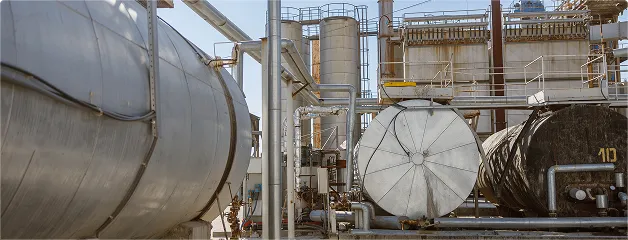
Large industrial plants generate continuous oil-bearing wastewater with sustained solids loading. Mercer systems are selected for durability, access, and predictable long-term operation.
Learn more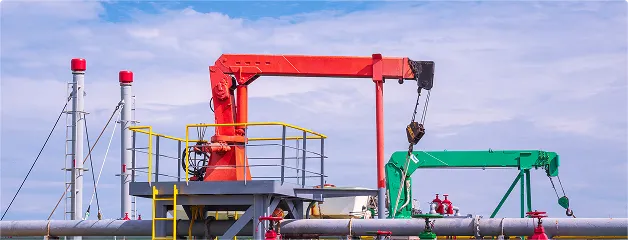
Upstream, midstream, and downstream operations rely on Mercer separators to manage high-volume wastewater where oil type and temperature fluctuate over time.
Power plants and major utility facilities require separators capable of continuous operation with minimal downtime and straightforward maintenance access.
Large fueling terminals, maintenance depots, and logistics hubs generate high-volume wastewater requiring reliable separation at scale.
At up to 2,000 GPM, oil-water separation becomes part of the facility’s long-term operating license. Mercer collaborates with owners and project teams to ensure the system is not only capable at startup, but governable, maintainable, and defensible throughout its service life. Engage Mercer during layout and system planning to avoid irreversible design decisions and protect the facility for decades to come.
Talk to Mercer about your application.The most costly failures are architectural ones: poor layout, inaccessible internals, and treatment paths that cannot be modified once the facility is operating. At this flow rate, retrofits are disruptive, expensive, and sometimes impossible without extended shutdowns.
Large systems accumulate value and risk over time. If internals cannot be safely accessed, inspected, and serviced, performance becomes an assumption rather than a managed outcome. Mercer prioritizes access, visibility, and service pathways so operators can intervene before problems escalate.
Systems in this range are expected to operate for decades. Mercer designs with material durability, structural integrity, and maintenance realism in mind, recognizing that staff, processes, and operating conditions will change long after commissioning.
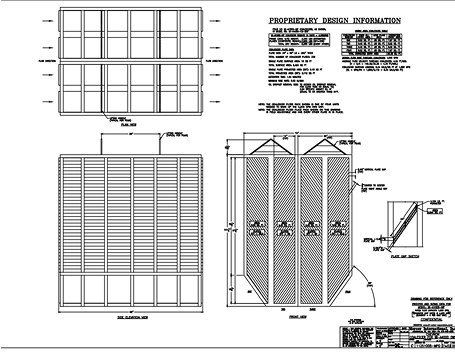
Tell us about your project and we’ll provide the right configuration drawings for your site and flow conditions.
request a free audit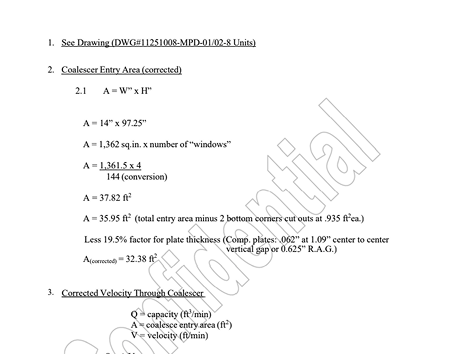
Provide your project details and we’ll share the full technical specs relevant to your operating conditions.
request a free audit