Above-Ground Oil-Water Separators
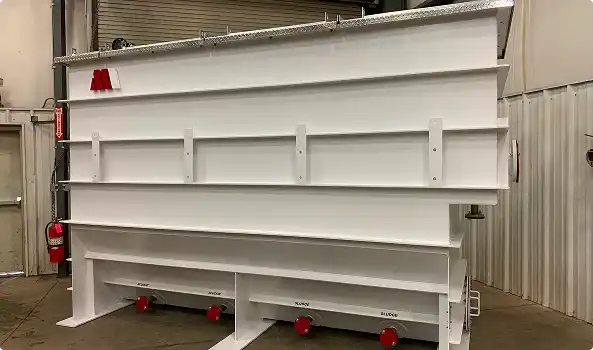
OPERATING TIER
Above-ground oil-water separators in the 150, 200, 300 GPM range are typically selected for continuous industrial and utility applications where solids, fouling, and maintenance realities quickly expose weak designs.
At this flow range, separators don’t fail because gravity separation “doesn’t work.” They fail because internal components foul, cleaning becomes impossible, and systems are sized or specified without regard for predictable and modeled wastewater behavior.
Mercer’s 150–300 GPM above-ground separators are designed for wastewater that contains various oils, solids, temperature variation, and flow variability — not idealized influent assumptions.
Mercer has built, installed, and supported separators in this size range — repeatedly, across real operating environments.

Built To Scale
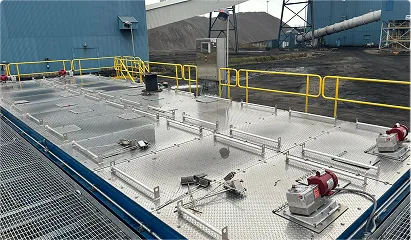
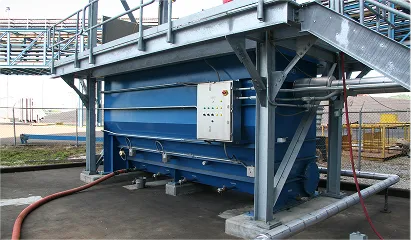
Please Note: Exact materials, dimensions, and configurations vary by application. Carbon steel construction is typically introduced at higher flow ranges where structural requirements dictate.
FIELD-PROVEN SYSTEMS
You should not have to click through galleries to determine whether a manufacturer has experience at this scale.
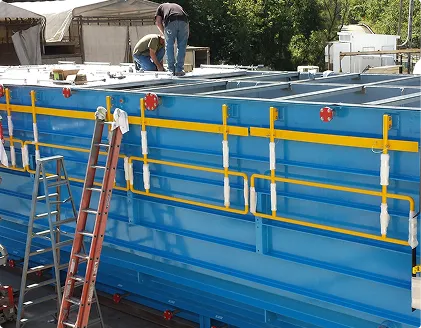
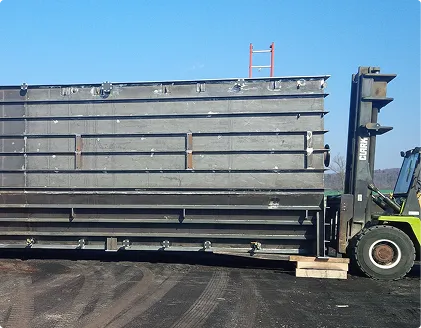
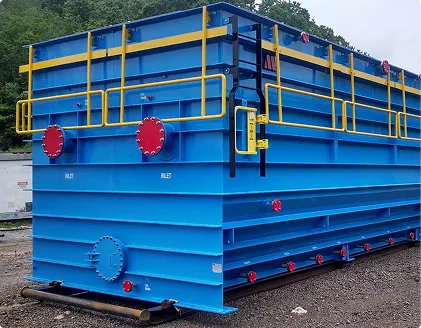
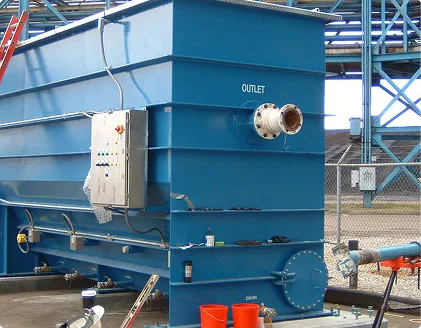
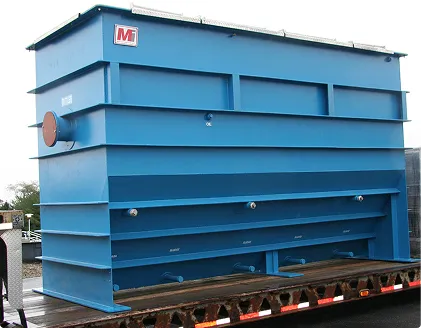
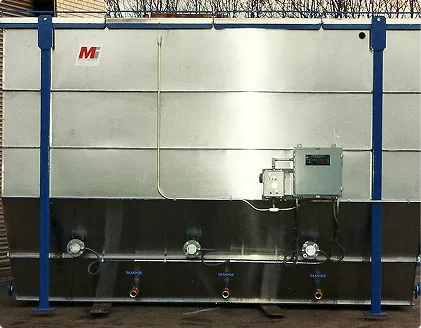
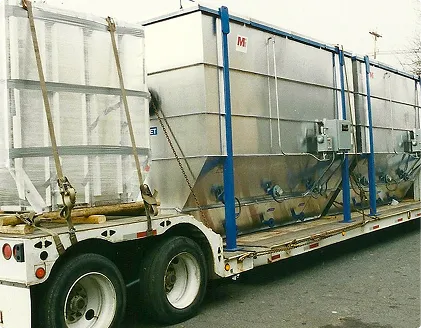
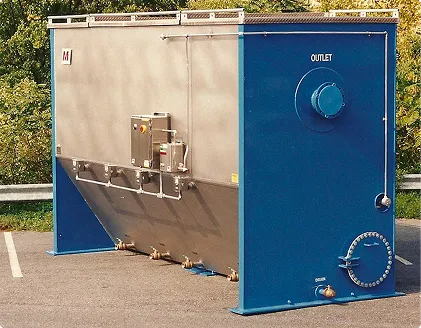
The installations below represent actual 150–300 GPM Mercer systems, deployed in diverse operating conditions.
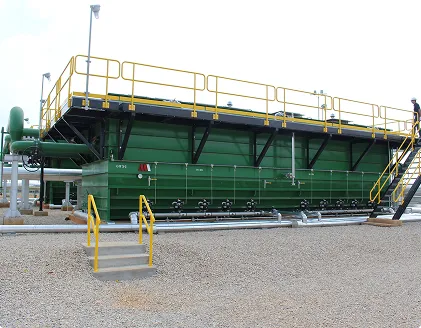
Above Ground
400 GPM
Above Ground
400 GPM
Above Ground
400 GPM
Above Ground
400 GPM
Above Ground
400 GPM
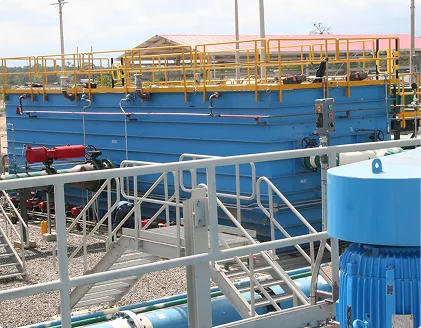
Above Ground
400 GPM
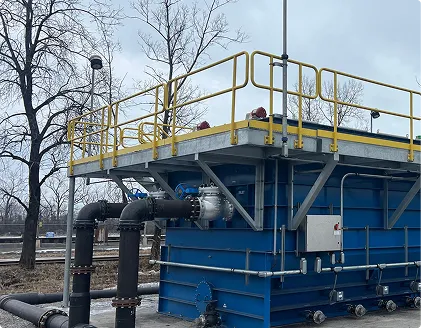
Above Ground
400 GPM
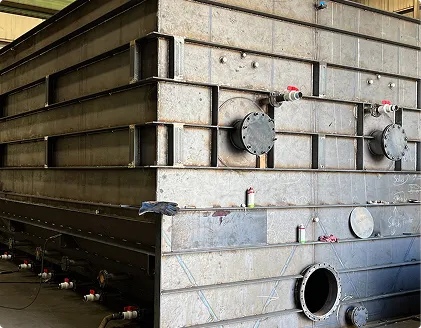
Above Ground
400 GPM
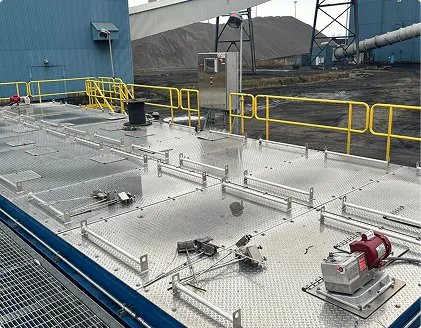
Above Ground
400 GPM
TRUSTED BY INDUSTRY LEADERS
A small sampling of companies withThe following organizations have operated Mercer separators within the 150–300 GPM family range.





ENGINEERED TO SOLVE
Flow rate is a label. Operating scale is the reality.
CORE TECHNOLOGY
The vessel provides time.
The coalescer defines performance.
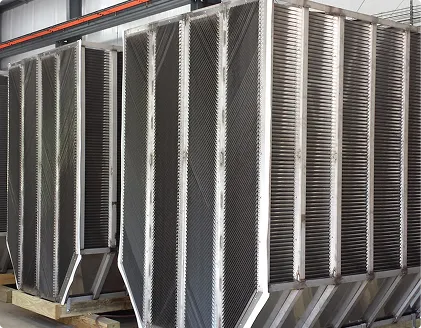
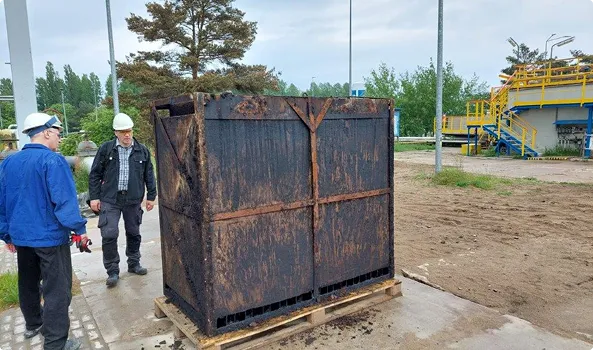
While the tank establishes residence time, effective separation depends on what occurs within the coalescing assembly itself. Mercer’s Multi-Pack™ is not generic fill media—it is a purpose-built separation module engineered around five core design principles. These elements collectively control oil rise behavior, solids disengagement, hydraulic stability, and long-term serviceability, particularly in smaller systems where declining performance often goes unnoticed until problems surface.
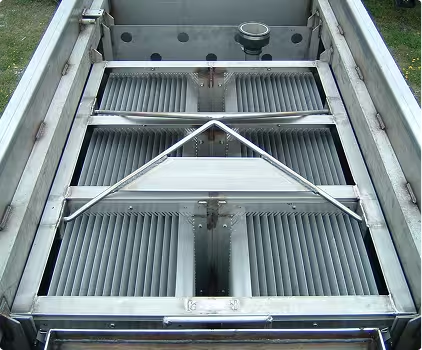
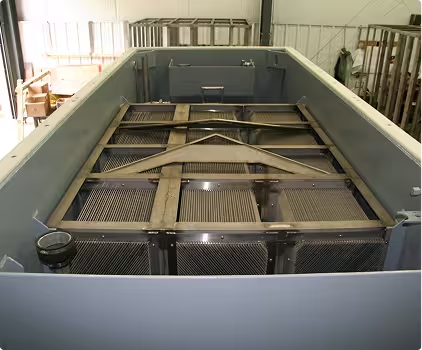

The Multi-Pack™ uses flat plates set at steep inclines instead of corrugated or honeycomb-style media. This configuration supports consistent droplet capture and upward oil migration while allowing solids to release cleanly and fall away. With no pockets or cavities to trap debris, solids accumulation does not quietly restrict flow or degrade separation efficiency over time.
Learn MorePlate spacing is adjustable rather than fixed. Spacing can be opened or tightened to align with actual operating conditions, including oil composition, temperature-driven viscosity changes, solids loading, and maintenance preferences. This flexibility allows separation performance to be tuned to real influent behavior instead of assumed design conditions.
Learn MorePlates are configured in a herringbone layout that directs internal flow paths and clearly distinguishes oil-rise zones from solids-settling zones. This organized geometry reduces hydraulic instability and preserves separation efficiency during intermittent or cycling flows common in low-GPM applications.
Learn MoreAs oil droplets coalesce and solids disengage from the plates, they are routed into dedicated Chimney Zones™ designed for quiescent separation. These zones provide calm pathways for oil to rise and solids to settle without re-entrainment, even during temporary spikes in solids loading.
Learn MoreAll at no cost to you.
We walk your site, capture real influent data if needed, engineer a custom separator from your worst-case scenario, and validate performance before fabrication. Only after the data confirms it do we issue a written guarantee. That’s how risk is removed.
PROVEN LONGEVITY
Built to Stay in Service
Many Mercer systems in this flow range were installed years ago and remain in continuous operation today. These are not retired units—they are active separators still managing oil and solids under real operating conditions.
Longevity at this scale reflects internal designs that can be inspected, cleaned, and maintained over time rather than replaced.
Above Ground
400 GPM
year: 2003

Above Ground
400 GPM
year: 2003
Above Ground
400 GPM
year: 2003
Above Ground
400 GPM
year: 2003
Above Ground
400 GPM
year: 2003
Above Ground
400 GPM
year: 2003
INDUSTRY APPLICATIONS
Above-ground oil-water separators in the 400–600 GPM range are deployed in operations where wastewater treatment is continuous, not intermittent, and where solids loading, oil characteristics, and maintenance access determine long-term performance more than nominal flow rate.
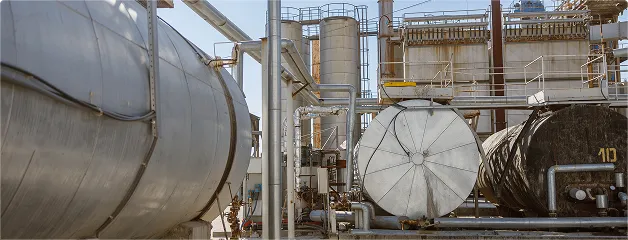
In power generation facilities using heated oils and heat exchanger systems, leaks combined with solids-bearing environments create fouling conditions that overwhelm conventional separators. Mercer systems have been selected to reduce maintenance frequency while maintaining discharge compliance.
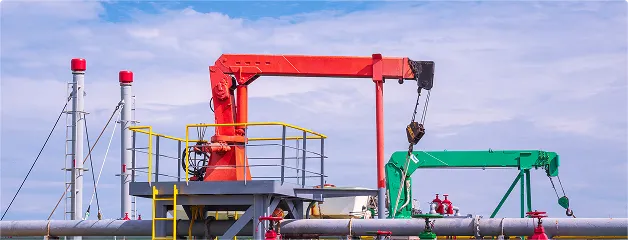
Large oil and gas operators have used Mercer separators in this range to manage high-solids wastewater from the well head, through the pipeline, and on through the distillation columns.Solids plague this journey, and the Multi-Pack™ is the only coalescer that can stand up to these sticky, viscous, and clustered solids.
Systems in this flow range are rarely “plug-and-play.”Before equipment is finalized, Mercer evaluates real operating data, discharge expectations, and compliance exposure to determine whether a single separator, staged treatment, or supporting technologies are required.Talk to Mercer early in the process to prevent downstream performance gaps, retrofits, or permit-driven surprises.
Talk to Mercer about your application.Most failures at this scale are not design errors — they are assumption errors. Real flows vary, solids behave unpredictably, and operating conditions drift over time. When these factors are not accounted for, performance degrades quietly until compliance is lost.
Mercer designs systems in this range to tolerate variability, not just steady-state operation. Inlet control, internal zoning, and conservative hydraulic loading are used to maintain separation performance during peak flows, washdowns, and transient events.
At 150–300 GPM, theoretical performance is not enough. Mercer emphasizes field testing, auditability, and verifiable operating conditions so owners are not relying solely on design intent or vendor claims.
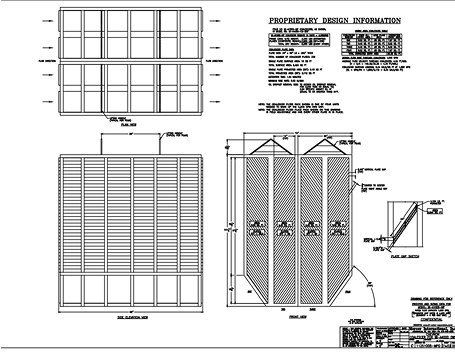
Tell us about your project and we’ll provide the right configuration drawings for your site and flow conditions.
request a free audit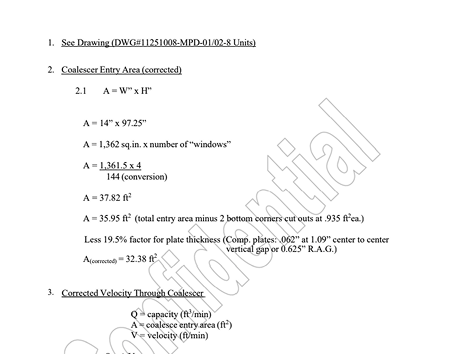
Provide your project details and we’ll share the full technical specs relevant to your operating conditions.
request a free audit